
Radial arm saw blades take a beating that ordinary crosscut blades aren't built for. The blade rides above the work and is pulled into the cut, so a standard high-hook woodworking blade tends to grab, self-feed, and climb the stock. Every blade in this collection is industrial-grade carbide-tipped and ground with a negative, zero, or only slightly positive hook angle. That reduced hook keeps the blade from grabbing as it's pulled through the material, giving you controlled, splinter-free general-purpose crosscuts across solid wood, plywood, chipboard, masonite, and single-sided laminates.
Selecting the right radial arm saw blades for your production schedule can improve efficiency and reduce unnecessary downtime. Matching the blade to the material thickness and desired finish helps maintain consistent cutting performance throughout long workdays. Regular blade cleaning removes resin and pitch that can increase friction, while routine inspections help identify worn or damaged carbide teeth before they affect cut quality. Proper storage also protects cutting edges from accidental damage when blades are not in use. Whether your shop handles custom woodworking or high-volume manufacturing, quality radial arm saw blades deliver dependable performance when paired with proper maintenance practices and a consistent sharpening schedule, helping you achieve reliable, repeatable results from one project to the next.
Cutting on a portable chop or miter saw? You want a thin-kerf blade.
The blades in this collection are full-kerf for rigidity on heavy industrial machines. If you're running a power-tool-branded chop saw or sliding compound miter saw (DeWalt, Makita, Bosch, and similar), a thin-kerf, lightweight blade will cut faster and load the motor less. See our miter & chop saw blades for thin-kerf options.
What's stocked
We carry full-kerf radial arm and overhead saw blades from 8-1/2" through 20" in diameter, plus 450mm truss and component blades, in 40 to 80 teeth. You'll find both 5/8" and 1" arbor bores, alternate-top-bevel (ATB) and triple-chip (TCG) grinds, and rigid full-thickness plates that resist deflection and vibration on heavy production machines. Blades are offered in premium (LORNA Industrial) and value (Popular Tools) lines so you can match the blade to the run.
How to choose a radial arm saw blade
Hook angle. The negative hook is what makes a radial arm blade safe and accurate. A more aggressive negative angle (around −5°) gives the most control and the least grabbing on overhead pull-down and chop-style cuts; zero and slightly negative angles suit larger-diameter blades where chip clearance matters more. If a blade is grabbing or self-feeding on your machine, you almost always want more negative hook, not less.
ATB vs. TCG grind. Alternating top bevel (ATB) is the all-around choice for clean crosscuts in solid wood, plywood, and single-sided laminate. Triple-chip grind (TCG) wears far slower on abrasive and harder materials, double-sided laminate, melamine, and Formica, and holds a clean edge longer across long production runs, at a small trade in initial cut finish.
Tooth count. More teeth give a finer, smoother finish and are better for trim, moulding, and finish crosscuts; fewer teeth clear chips faster for general framing and rougher lumber.
Diameter and bore. Match the blade diameter and arbor bore to your machine. We stock both 5/8" and 1" bores across the common diameters, and any blade can be modified to fit a different bore or pin pattern if your machine needs it.
Truss and component saw blades (450mm)
Our 450mm blades are built for overhead truss and component saws, such as Spida, Apollo, and MangoTech machines. These run above the material like a radial arm saw, which is why they live in this collection. The blades listed here use a positive hook angle suited to those component-saw applications; a negative-hook option is also available for machines that require it.
Made to fit your machine
These are aftermarket blades made to fit a wide range of radial arm, overhead, and component saws. If you need a different bore, a keyway, or a custom pin pattern, any blade can be modified to fit your machine. Carbide-tipped teeth resharpen many times over, keeping your cost-per-cut low across the life of the blade. Brand names are the property of their respective owners.
-
LORNA Industrial
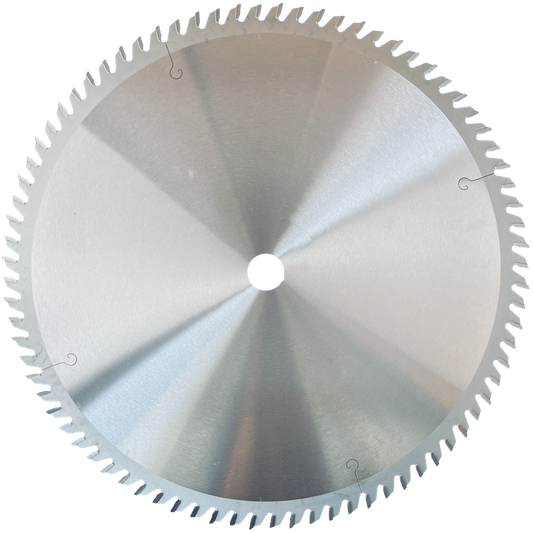 ITEM # SCA014100100150
14" D x 100T ATB x 1" Bore Crosscut Saw Blade
SaleITEM # SCA01410010015014" D x 100T ATB x 1" Bore Crosscut Saw Blade
⌀ 14 inch100 TeethHardwoodRegular price $205.00Regular price$265.00Sale price $205.00Sale -
Popular Tools
 SaleITEM # RA1460A
14 inch D x 60 Teeth x ATB x 1 inch Bore Radial Arm Saw Blade (RA1460A)
⌀ 14 inch60 TeethHardwoodRegular price $199.80Regular price$222.00Sale price $199.80Sale -
Popular Tools
SaleITEM # RA2060A
20 inch D x 60 Teeth x ATB x 1 inch Bore Radial Arm Saw Blade (RA2060A)
⌀ 20 inch60 TeethHardwoodRegular price $350.78Regular price$389.75Sale price $350.78Sale -
Popular Tools
SaleITEM # RA1880
18 inch D x 80 Teeth x ATB x 1 inch Bore Radial Arm Saw Blade (RA1880)
⌀ 18 inch80 TeethHardwoodRegular price $330.98Regular price$367.75Sale price $330.98Sale -
Popular Tools
SaleITEM # RA1640
16 inch D x 40 Teeth x ATB x 1 inch Bore Radial Arm Saw Blade (RA1640)
⌀ 16 inch40 TeethHardwoodRegular price $261.45Regular price$290.50Sale price $261.45Sale -
Popular Tools
SaleITEM # RA1280T
12 inch D x 80 Teeth x TCG x 1 inch Bore Radial Arm Saw Blade (RA1280T)
⌀ 12 inch80 TeethHardwoodRegular price $157.28Regular price$174.75Sale price $157.28Sale -
Popular Tools
SaleITEM # RA1260A58
12 inch D x 60 Teeth x ATB x 5/8 inch Bore Radial Arm Saw Blade (RA1260A58)
⌀ 12 inch60 TeethHardwoodRegular price $116.10Regular price$129.00Sale price $116.10Sale -
Popular Tools
SaleITEM # RAWF1645
16 inch D x 45 Teeth x ATB+R x 1 inch Bore Radial Arm Saw Blade (RAWF1645)
⌀ 16 inch45 TeethHardwoodRegular price $189.00Regular price$210.00Sale price $189.00Sale -
Popular Tools
SaleITEM # RA85060
8-1/2 inch D x 60 Teeth x ATB x 5/8 inch Bore Radial Arm Saw Blade (RA85060)
⌀ 8-1/2 inch60 TeethHardwoodRegular price $119.03Regular price$132.25Sale price $119.03Sale -
Popular Tools
SaleITEM # RA1860
18 inch D x 60 Teeth x ATB x 1 inch Bore Radial Arm Saw Blade (RA1860)
⌀ 18 inch60 TeethHardwoodRegular price $296.32Regular price$329.25Sale price $296.32Sale -
Popular Tools
SaleITEM # RA1660
16 inch D x 60 Teeth x ATB x 1 inch Bore Radial Arm Saw Blade (RA1660)
⌀ 16 inch60 TeethHardwoodRegular price $267.75Regular price$297.50Sale price $267.75Sale -
Popular Tools
SaleITEM # RA1440
14 inch D x 40 Teeth x ATB x 1 inch Bore Radial Arm Saw Blade (RA1440)
⌀ 14 inch40 TeethHardwoodRegular price $245.93Regular price$273.25Sale price $245.93Sale -
Popular Tools
SaleITEM # RA2080A
20 inch D x 80 Teeth x ATB x 1 inch Bore Radial Arm Saw Blade (RA2080A)
⌀ 20 inch80 TeethHardwoodRegular price $417.82Regular price$464.25Sale price $417.82Sale -
Popular Tools
SaleITEM # RA1260A
12 inch D x 60 Teeth x ATB x 1 inch Bore Radial Arm Saw Blade (RA1260A)
⌀ 12 inch60 TeethHardwoodRegular price $116.10Regular price$129.00Sale price $116.10Sale -
Popular Tools
SaleITEM # RA1260T
12 inch D x 60 Teeth x TCG x 1 inch Bore Radial Arm Saw Blade (RA1260T)
⌀ 12 inch60 TeethHardwoodRegular price $116.10Regular price$129.00Sale price $116.10Sale -
Popular Tools
SaleITEM # RA1060A
10 inch D x 60 Teeth x ATB x 5/8 inch Bore Radial Arm Saw Blade (RA1060A)
⌀ 10 inch60 TeethHardwoodRegular price $92.92Regular price$103.25Sale price $92.92Sale -
Popular Tools
SaleITEM # RA1280A
12 inch D x 80 Teeth x ATB x 1 inch Bore Radial Arm Saw Blade (RA1280A)
⌀ 12 inch80 TeethHardwoodRegular price $157.28Regular price$174.75Sale price $157.28Sale -
Popular Tools
SaleITEM # RA1060T
10 inch D x 60 Teeth x TCG x 5/8 inch Bore Radial Arm Saw Blade (RA1060T)
⌀ 10 inch60 TeethHardwoodRegular price $92.92Regular price$103.25Sale price $92.92Sale -
Popular Tools
SaleITEM # RA1040A
10 inch D x 40 Teeth x ATB x 5/8 inch Bore Radial Arm Saw Blade (RA1040A)
⌀ 10 inch40 TeethHardwoodRegular price $95.40Regular price$106.00Sale price $95.40Sale -
Popular Tools
SaleITEM # RA1240A
12 inch D x 40 Teeth x ATB x 1 inch Bore Radial Arm Saw Blade (RA1240A)
⌀ 12 inch40 TeethHardwoodRegular price $99.90Regular price$111.00Sale price $99.90Sale -
Popular Tools
SaleITEM # RA1040T
10 inch D x 40 Teeth x TCG x 5/8 inch Bore Radial Arm Saw Blade (RA1040T)
⌀ 10 inch40 TeethHardwoodRegular price $99.90Regular price$111.00Sale price $99.90Sale
